

Developing a branded plush character set: defining samples and budget scope
Planning a plush character set? Compare developing all characters together with starting from one, and check which samples and revisions a quotation includes.
A branded plush set may share a visual style while still containing several distinct development tasks. Sending three pictures and asking for a price for “the set” can produce quotations with different scopes: one may cover three complete samples, while another covers an initial concept sample only. Define the development work before comparing budgets.
The images and examples are illustrative. They do not represent an actual Phat Dat collection, order or client project.
Record decisions for each character
For characters A, B and C, record intended use, proposed size, recognisable features that must stay, permitted adjustments and the person who will approve the work. Only then identify elements that might be shared. Describing all three as 20 cm tall does not establish that they use one pattern or the same material quantity; measurement and construction still need review by the sample developer.
- Potentially shared: preferred fabric texture, brand colours, label attachment or packaging approach, with conditions for reuse.
- Character-specific: head/body proportions, ears, wings, tails, face details and distinctive features.
- Still open: missing views, unconfirmed materials or unclear rights to a character.
The guide to preparing a private-label plush collection covers the broader launch brief. This article focuses on the development scope of a set; it does not replace technical specifications or production approval.
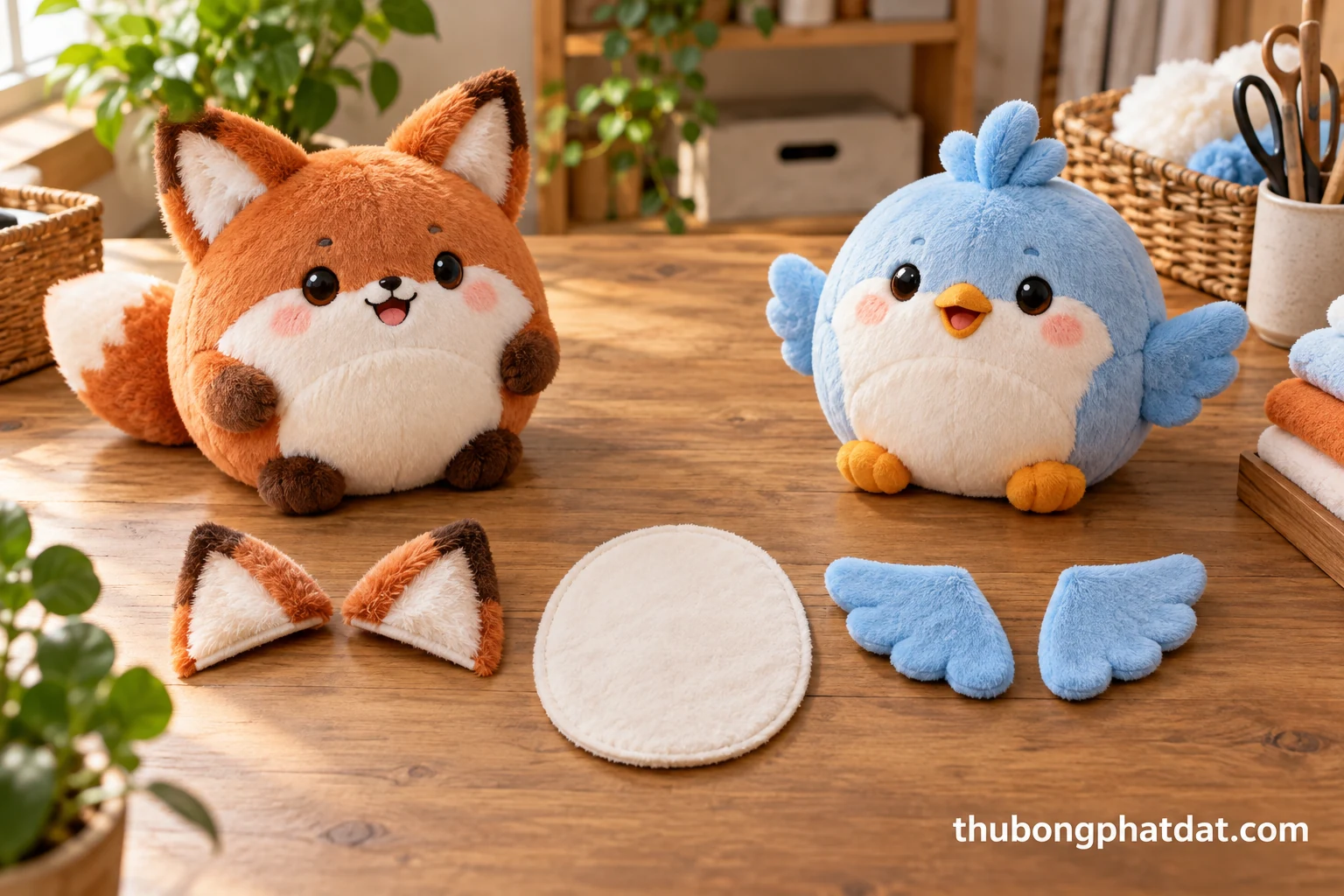
A shared visual direction still needs confirmation of common elements and character-specific details.
A hypothetical set with three approval scopes
Illustrative example: A is a pointed-ear fox, B is a bird with wings, and C is a leaf character. All three are intended to have rounded bodies and one label style. The brief might say “rounded body is a shared direction; common construction remains subject to confirmation”. Fox ears, bird wings and the leaf cluster are separate items. Do not assume that one pattern or one sample round covers the whole set.
Approval of A's expression does not approve B's or C's face. A change to the set's base colour flags all three codes for review. A change to A's ears first flags A, followed by a check for any effect on shared elements. The number of affected codes helps define the discussion; it is not a formula for calculating revision charges.
Compare two development scopes before comparing prices
Option one: develop A, B and C in the same phase, with separate required results and approval records. Ask what the quotation includes, which feedback rounds are covered, which shared tasks are recognised and what triggers extra work.
Option two: develop A first to test the visual direction, then decide whether to proceed with B and C. Ask which outputs from A may serve as references, how long the B/C quotation remains applicable and whether a change of direction requires a new scope. A phased approach does not by itself guarantee lower total fees or a shorter delivery time.
Compare both quotations against the same deliverables: design or documentation to be supplied, a physical sample where agreed, materials and details requiring confirmation, included revisions, labels and packaging, and exclusions. Do not combine a development fee with production-unit pricing until those two scopes are clearly separated.
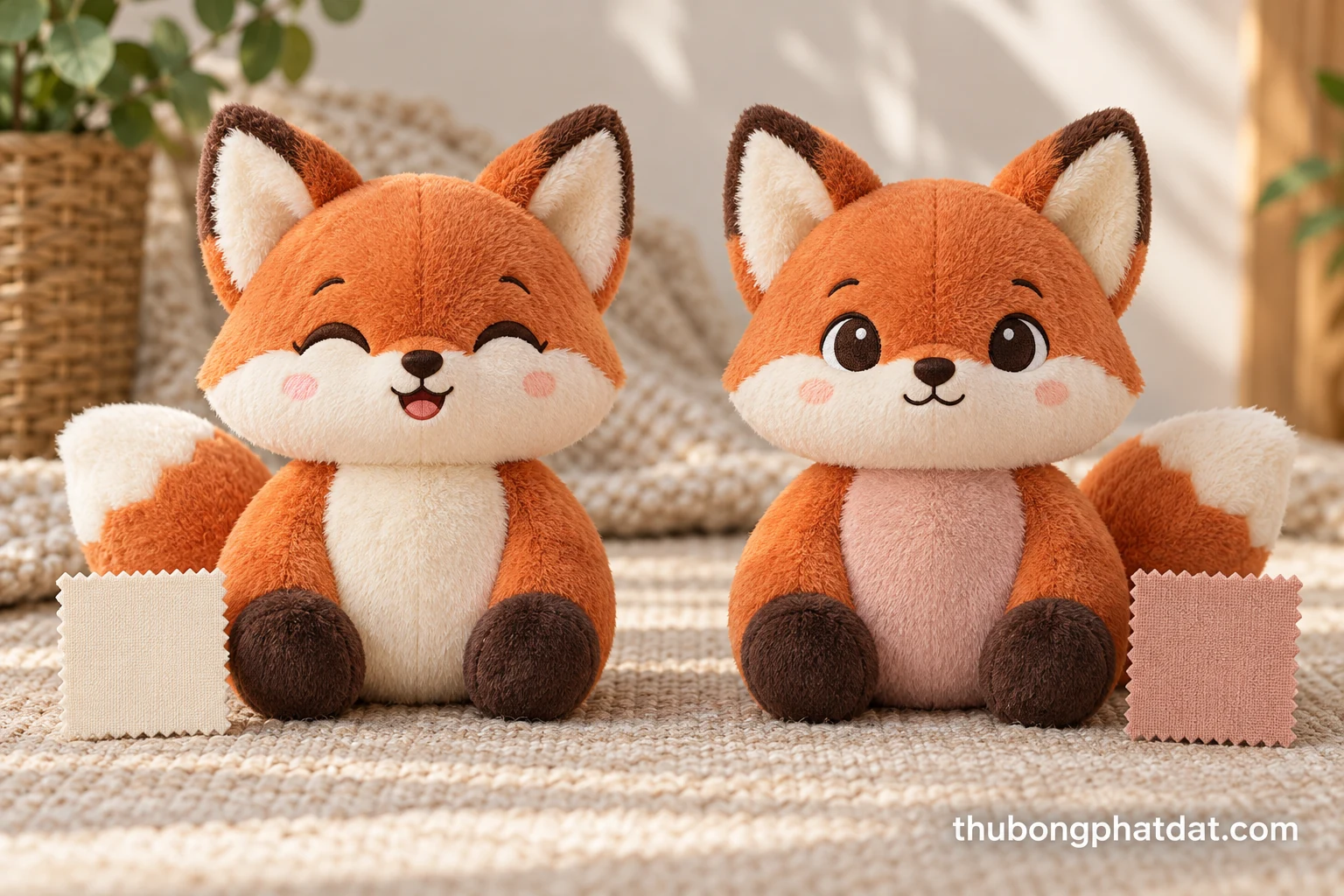
A new facial expression and belly-panel colour are separate changes to identify in a revised version.
A practical quotation request
“We are considering characters A/B/C for [intended use]. The file identifies essential features for each code, potential shared elements and open decisions. Please quote both simultaneous development and an A-first approach. For each option, identify deliverables, included revision work, decisions to revisit when adding B/C, exclusions and the basis for confirming the schedule.”
Include available views, character-use rights and the final decision-maker. If production quantities by code remain provisional, say so. A development fee is not a commitment to accept every quantity mix. When discussing the set with a plush manufacturer, establish who confirms shared elements, specific features and changes, rather than relying on a single price for an undefined “set”.