

One mascot, two sizes: Details to approve again
Review facial features, logos, accessories and measurement methods for each mascot size, with a separate approval checklist to prevent version mix-ups.
Approval of a small mascot does not automatically approve the larger version. When adding a size, the aim is to preserve the character's identity while reviewing the details people will see, hold and use. The specification should clearly separate shared features from items requiring individual confirmation.
Define each size and its measurement method
Give each size a separate code, such as M20 and M30 in this illustrative example. State the dimension measured, the product's position and whether ears, hats or other projecting parts are included. Do not describe both sizes with a height measurement while measuring one sitting and the other standing.
Link each code to its drawing, reference sample, quantity and packing requirements. If a size has no approved sample, mark it as pending; a photograph of the other size is only a reference.
Scaling is a starting point for discussion
In a hypothetical example, increasing height from 20 cm to 30 cm gives a linear scale factor of 1.5. A logo 4 cm wide would become 6 cm wide if scaled by the same factor. This calculation describes one drawing option; it does not establish that a 6 cm logo will look balanced or reproduce well on the actual surface.
Do not use that factor to infer labour costs, filling quantities, durability or the suitability of every accessory. The manufacturer needs to review the relevant design, materials and sample.
Details to review
Facial features and character proportions
Compare the eyes, nose, mouth and their spacing in photographs taken from the same angle. Review the overall appearance before individual details. For a character with a large head or short arms, identify the defining features to preserve instead of simply asking for it to look like the small version.
Logos, lettering and clothing
Check logo placement at the actual size, text legibility and its relationship to seams or clothing edges. Confirm whether clothing is removable or attached, how it is put on and removed, and the area available for the logo. Decide separately whether the logo stays the same size or scales with the body.
Accessories and intended use
Hanging loops, labels and packaging may need to change between sizes. Record which parts are shared and which require renewed approval. Send any requirements for the intended recipients or destination market to the responsible party; approval of appearance does not demonstrate suitability for every condition of use.
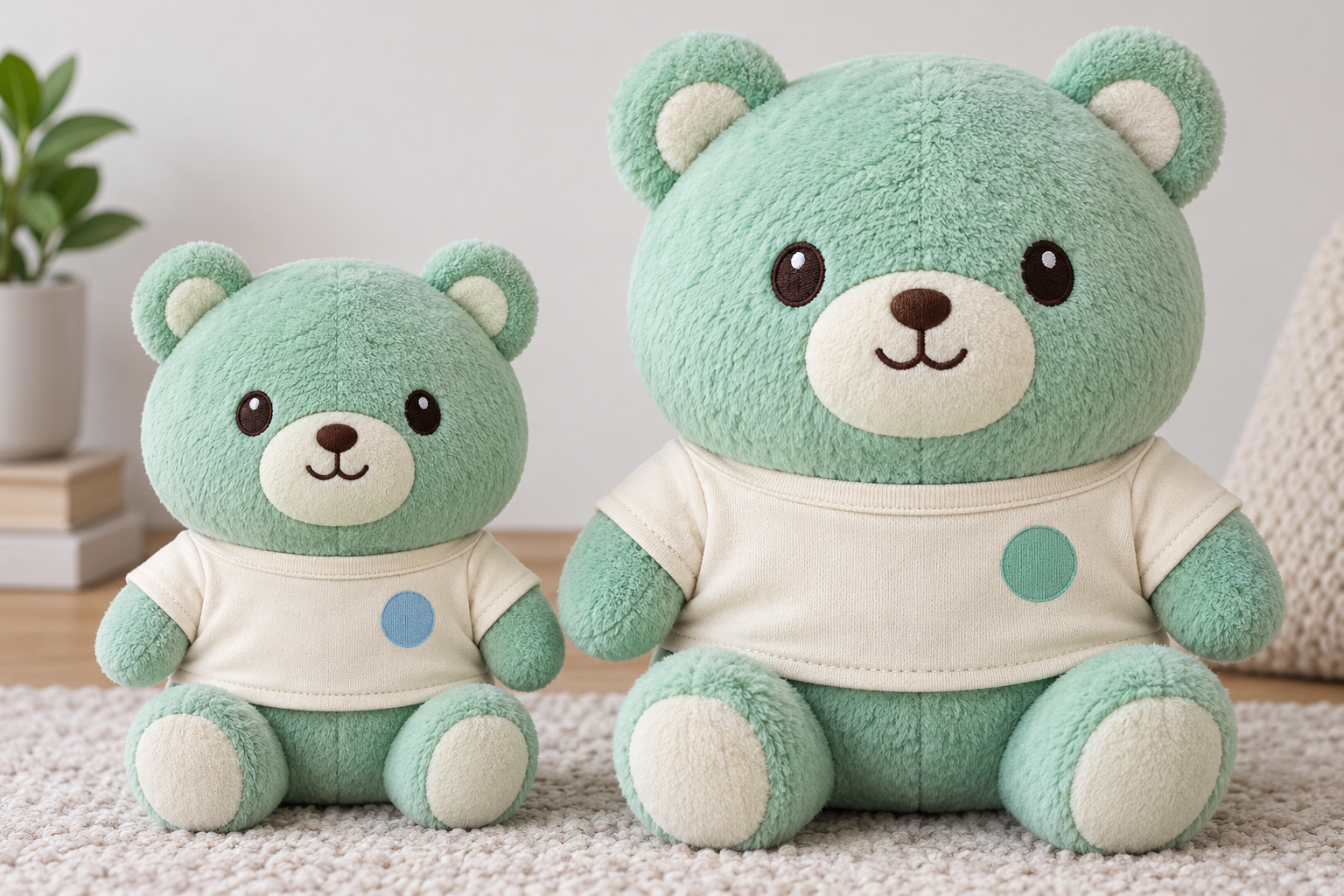
Compare facial features, placement and brand colours for each size instead of merely enlarging a drawing. AI illustration, not a Phat Dat sample or project.
A size-specific approval checklist
- M20: measurement method agreed; drawing approved; physical sample under review; logo placement needs adjustment.
- M30: measurement method agreed; drawing under review; physical sample not approved; packaging pending.
- Shared information: character, brand colours and permission to use the design.
- Separate information: dimensions, facial features, logos, accessories, materials and quantities for each size.
This checklist illustrates how to organise information; it is not the status of a Phat Dat project. Link each comment to a size code, version and approver. A general statement that the mascot is approved does not identify which size is ready for the next stage.
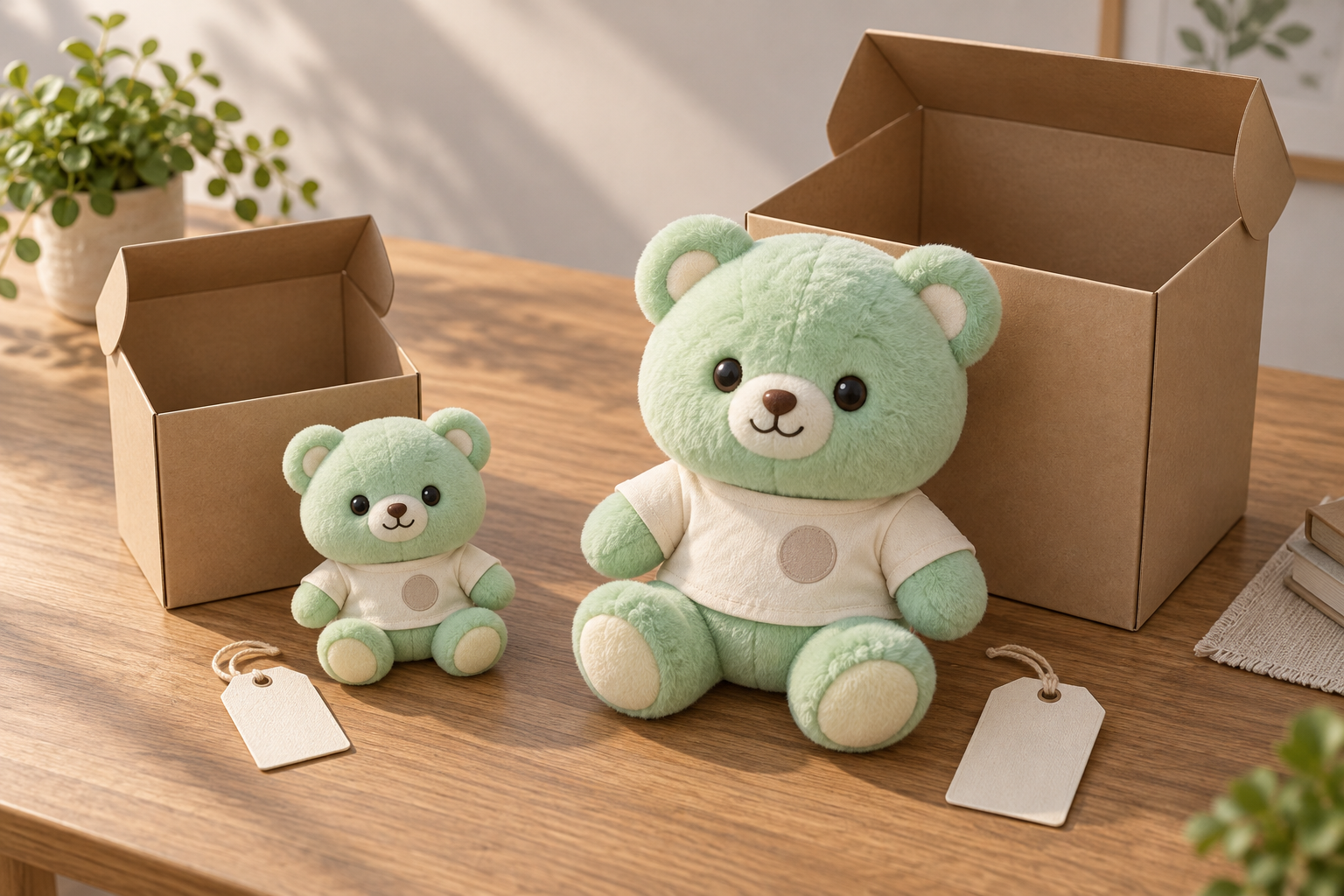
Accessories and packaging require confirmation for each size. AI illustration, not a Phat Dat packing specification or project.
Discuss both sizes with Phat Dat before confirming the order
Send both proposed sizes, quantities for each and the features that must be preserved. Read Phat Dat's sampling process and approval criteria to prepare the review. Sampling schedules, costs and revision scope must be confirmed for the specific request; an approved small sample does not replace approval of the larger size.
For specifications with several versions, see how to separate shared and variant-specific details in a mascot tech pack so the approvals remain clearly identified.