

Prototype, approval sample and first production sample: Which is used when?
Distinguish sample roles by purpose, document version and approval scope before moving a plush order to its next step.
Prototype, approval sample and first production sample are common terms in plush order discussions, but different teams may use them differently. Make clear what a sample is intended to resolve, which documents it belongs to and exactly what has been approved. These terms should not be treated as a fixed three-stage procedure applying to every Phat Dat order.
Images are illustrations, not photographs of an actual factory, customer order or product.
Prototype: testing decisions that are still open
A prototype helps show how an idea becomes a physical shape, construction and set of details. Feedback, revisions or another attempt may still be needed. Record what is acceptable, what remains open and which request file is being used.
Illustrative example: P01 has the intended character shape, but its logo position needs changing. Saying “the shape is fine” approves that aspect only. It does not establish that the logo, labels and packaging are ready to proceed.
Approval sample: a reference for the agreed scope
An approved sample should be linked to the final document version for the relevant parts of the order. Record the sample code, date, person confirming and approval scope. If there are several sizes or variants, identify which codes the approval covers.
In the example, P02 has the revised logo and is accepted for size M20 with document set V3. This does not automatically approve M30 or another colour that has not been reviewed. Keep open points separate rather than using a blanket “all approved” statement without supporting records.
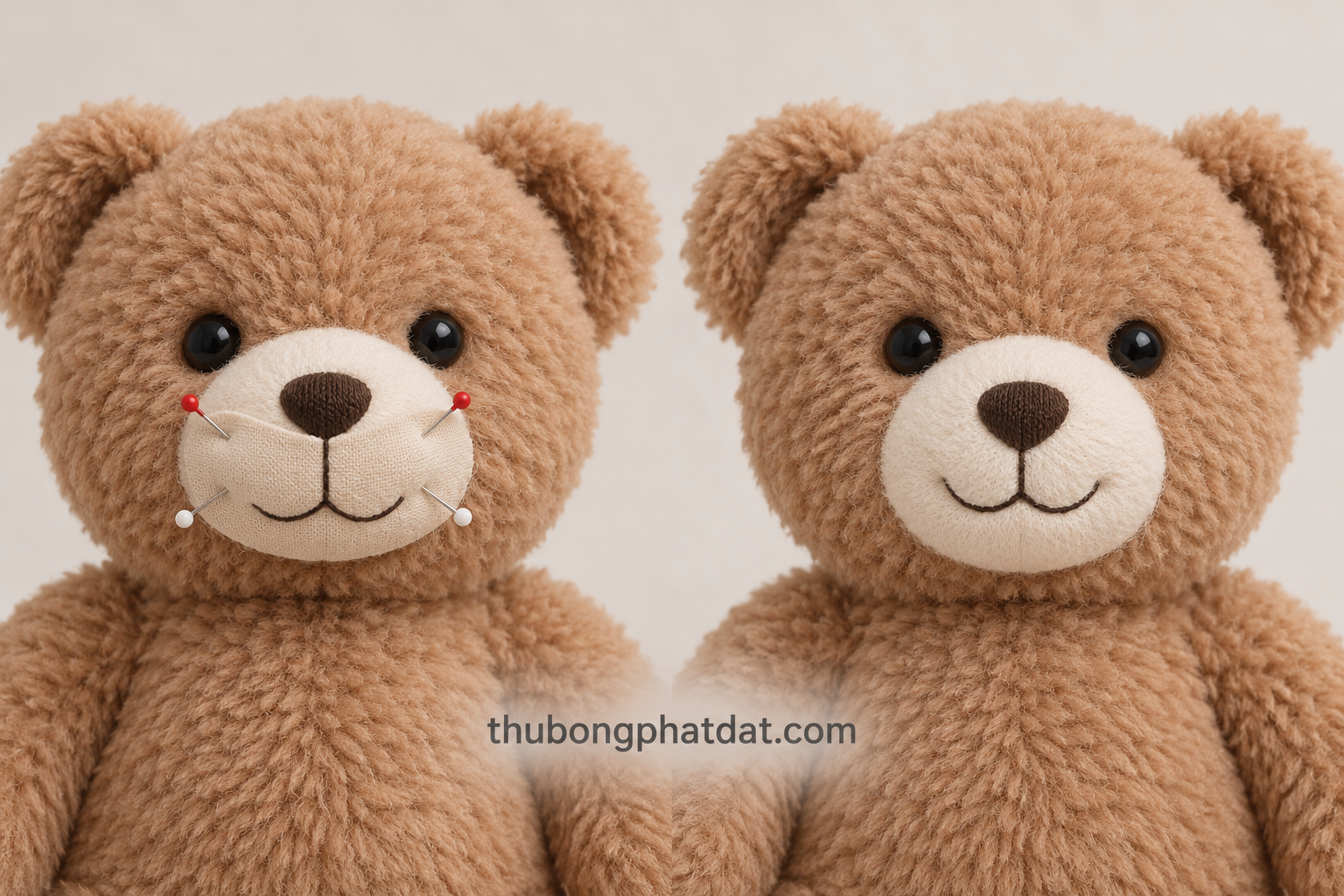
An unresolved prototype detail differs from a completed detail.
First production sample: comparing the start of production
If the parties agree to a first production sample check, its purpose is to compare an item from the start of the work with the approved reference. Clarify how the sample is selected, the criteria, who confirms and how differences will be handled.
One good-looking sample does not establish that the whole batch has passed. A first production sample also does not replace in-process inspection or any test evidence required for the order. Confirm the name and scope of this check with the team responsible.
Record permission to move forward in specific terms
- The sample code and document set being compared.
- The sample's role: testing an option, serving as the approved reference or checking the start of production.
- Confirmed details and points awaiting revision or an answer.
- The person confirming, the time and the record supporting that decision.
- The next activity permitted and any conditions still to be completed.
Illustrative example: P02/V3 is approved for shape and logo, while packaging remains open. Record the two scopes separately and ask which work may proceed under the agreement. Do not interpret shape approval as an instruction to produce or pack the entire order.
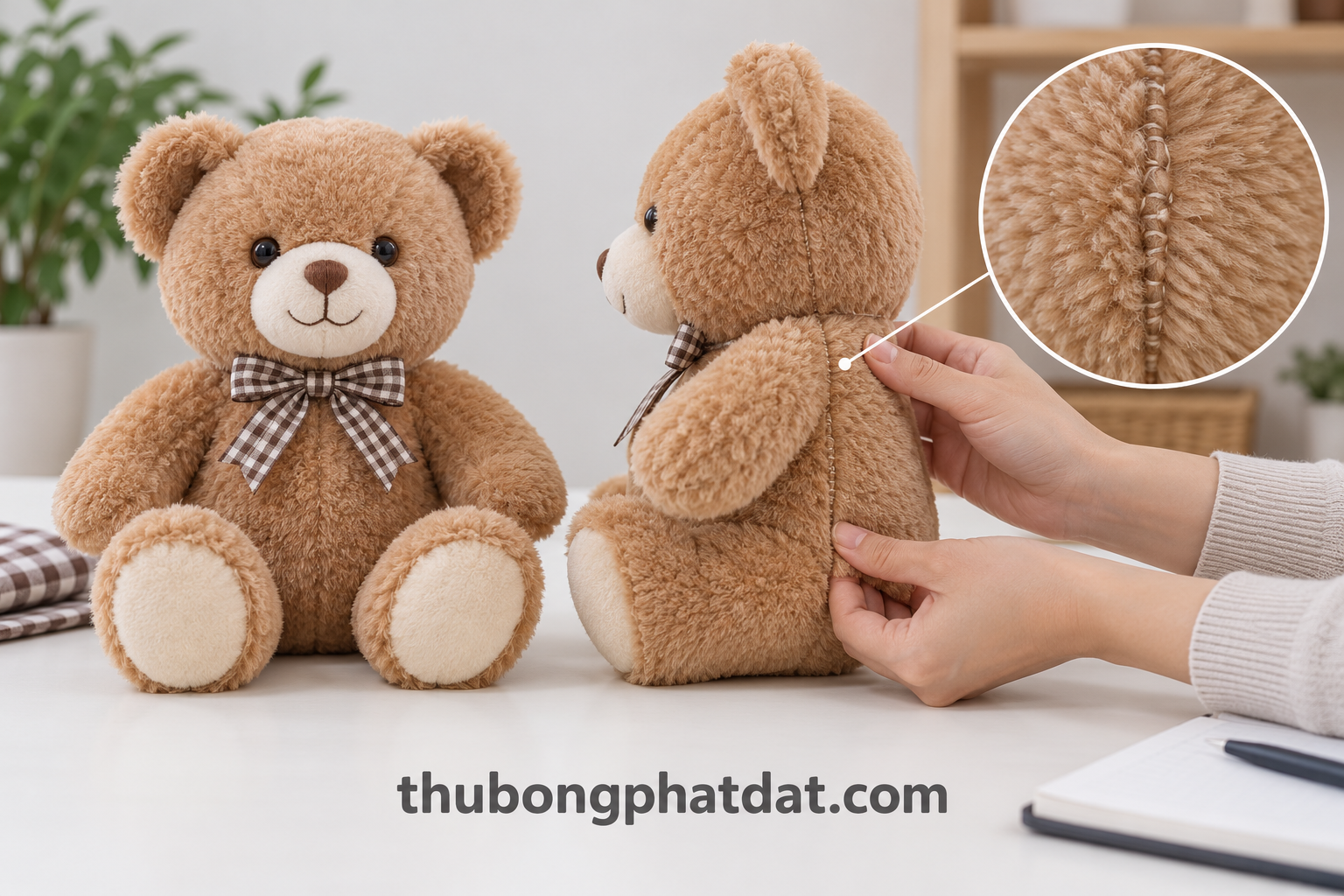
Compare the reference and seam detail; one sample does not establish acceptance of a whole batch.
When something changes after approval
Identify the change, affected codes and new version. Ask the responsible team which sample comparisons or confirmations need repeating. Retain the previous approval for the history, but clearly identify the version currently in effect.
Size, logo, material or label changes may affect other parts of the order; assess the effect against the actual request. Do not change dates or call a new sample “approved” without evidence.
Discuss the sample's role with Phat Dat
Read Phat Dat's sampling and approval guidance, then confirm the steps and records for your order. When working with a plush toy factory, identify the decision each sample is expected to support. This guide explains distinctions for discussion; it does not publish a factory SOP or promise that every order uses all three sample types.
If you are evaluating a manufacturer, consult Phat Dat's company information alongside the sample brief so that your request reaches the appropriate contact.