

Plush gifts for a corporate Tet campaign: planning approvals and delivery
Plan a Tet plush gift order around clear approval owners and versions. See what to do when artwork changes or feedback is late before confirming production and receipt dates.
You have an idea for Tet plush gifts, but marketing is still reviewing the artwork, purchasing is checking the budget, and nobody has confirmed the final version for the supplier. A delivery date alone will not resolve these open decisions. Give each milestone a clear outcome, an approval owner and a feedback deadline.
Start with when your team needs the gifts in hand
Separate the gift-giving date from the date your team needs to receive the order for checking, assembling gift sets and arranging any onward delivery. Record the receiving location, contact and work that remains after arrival. “Before Tet” is not a specific receipt date or receiving arrangement.
Send the required receipt date to the supplier so they can assess the design, materials, quantities and other work involved. Sample development, revisions, production and delivery need confirmation for this order. A previous order’s timetable does not establish the lead time for a new design.
Make it clear what each approval covers
The person who approves the character design may not be authorised to approve the cost. Budget approval also does not establish that the sample, logo and packaging are final. Your schedule can separate these decisions:
- Design and branding: who confirms the character, colours, logo and required wording?
- Physical sample: who reviews the actual size, materials and details, and which version becomes the reference?
- Order scope: who confirms quantities, what the quotation includes and any open conditions?
- Permission to proceed: who can send the final instruction to the supplier, based on the confirmed versions?
One person may hold several roles if that is how your business works. The purpose is to clarify authority and the decision being made, rather than add signatures for their own sake.
Send one consolidated response with a version reference
Agree who will send the collected feedback. Identify the artwork, sample and documents by a clear code or date, and say what stays, what should change and what remains undecided. A supplier should not have to choose between an “approved” message and a later request to change the colour.
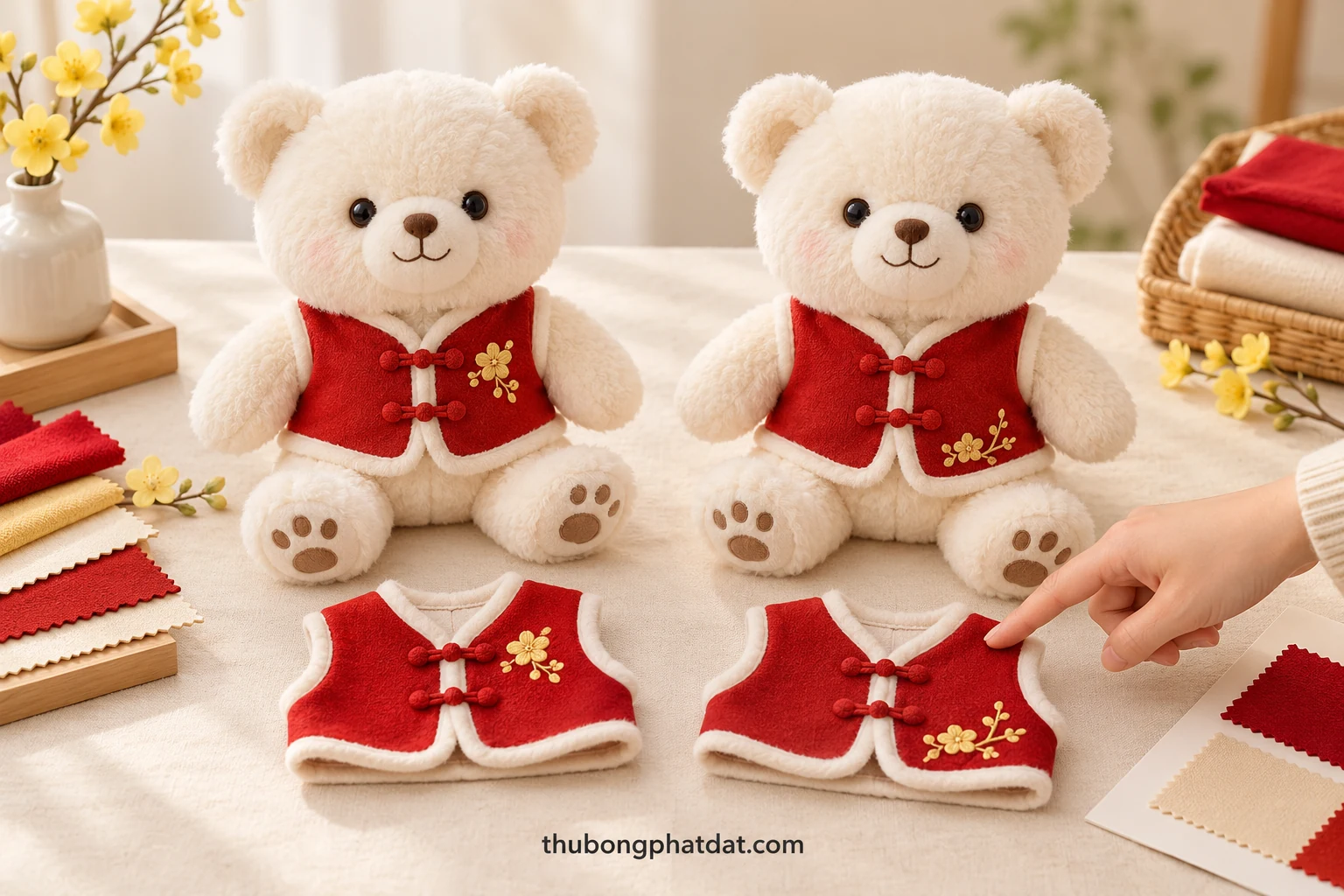
Garment and branding options need to be linked to the exact sample version under review.
Example: the budget is approved, but the logo changes
In a hypothetical case, the buyer receives a quotation for a bear wearing a garment with logo V1. Purchasing approves that budget, but marketing then supplies logo V2, which requires a different treatment. Forwarding only the budget approval leaves it unclear whether V2 has been assessed.
The coordinator should send the revised artwork and ask which sampling, material, decoration, cost and timing conditions are affected. Once the supplier responds, obtain the appropriate approvals for those changes before sending the instruction to proceed. Renaming V1 as V2 in the old schedule does not preserve the original conditions.
Record the agreed final version, decision time, approval owner and work authorised. This example explains how to manage a change; it is not a fixed PHAT DAT STUFFED TOYS FACTORY procedure or a description of an actual project.
If feedback is late, ask which options are still feasible
Explain what is still awaiting approval and the receipt date you need to keep. Ask the supplier which options remain possible: retaining a confirmed design, assessing a simpler revision or changing the receiving plan. Each option needs an updated answer about scope and timing. A proposal is not a confirmed plan.
An internal feedback deadline passing does not amount to approval. Nor should the gift distribution team be promised that the order will arrive on time simply because the sample looks almost finished.

The gift sample, packaging and tag content should share one confirmed final version.
A short schedule everyone can follow
- Required receipt date and the work needed before gifts can be distributed.
- The output to approve at each milestone: artwork, physical sample, tag wording, quotation or final order brief.
- Current version, approval owner, feedback contact and response deadline.
- What has been agreed, what remains open and where the confirmation is recorded.
- If a decision is late or the design changes: who will contact the supplier, which option needs review and which dates have actually been reconfirmed.
When discussing a Tet gift order with the plush manufacturing team at PHAT DAT STUFFED TOYS FACTORY, send the reference artwork or sample, quantities, branding requirements and this schedule. Ask which milestones still need confirmation before ordering. The schedule is a suggested planning aid for the buyer, not a universal factory lead-time commitment. Images illustrate ideas and are not records of an actual order.