

Multi-SKU plush export orders: match each product to the buyer’s approved brief
Keep product checks tied to the correct SKU and approved revision. A rabbit and dinosaur example shows why one result cannot cover different products or changes.
An export order includes both rabbits and dinosaurs, but the report only says “samples passed”. Which product, size and revision does that cover? Before approving the next step, ask for photographs and findings that clearly identify each product code.
Connect each product to the right approved revision
An SKU is the code used to distinguish a product in the order. Different sizes, colours or accessories may need separate entries under the identification system agreed with the supplier. Use the same codes in the brief, photographs, feedback and approval record.
For each code, keep the approved sample or images, the current requirements and the features to be checked together. Consolidate changes from messages into the agreed record. Do not leave the reviewer to choose between several files all called “final”.
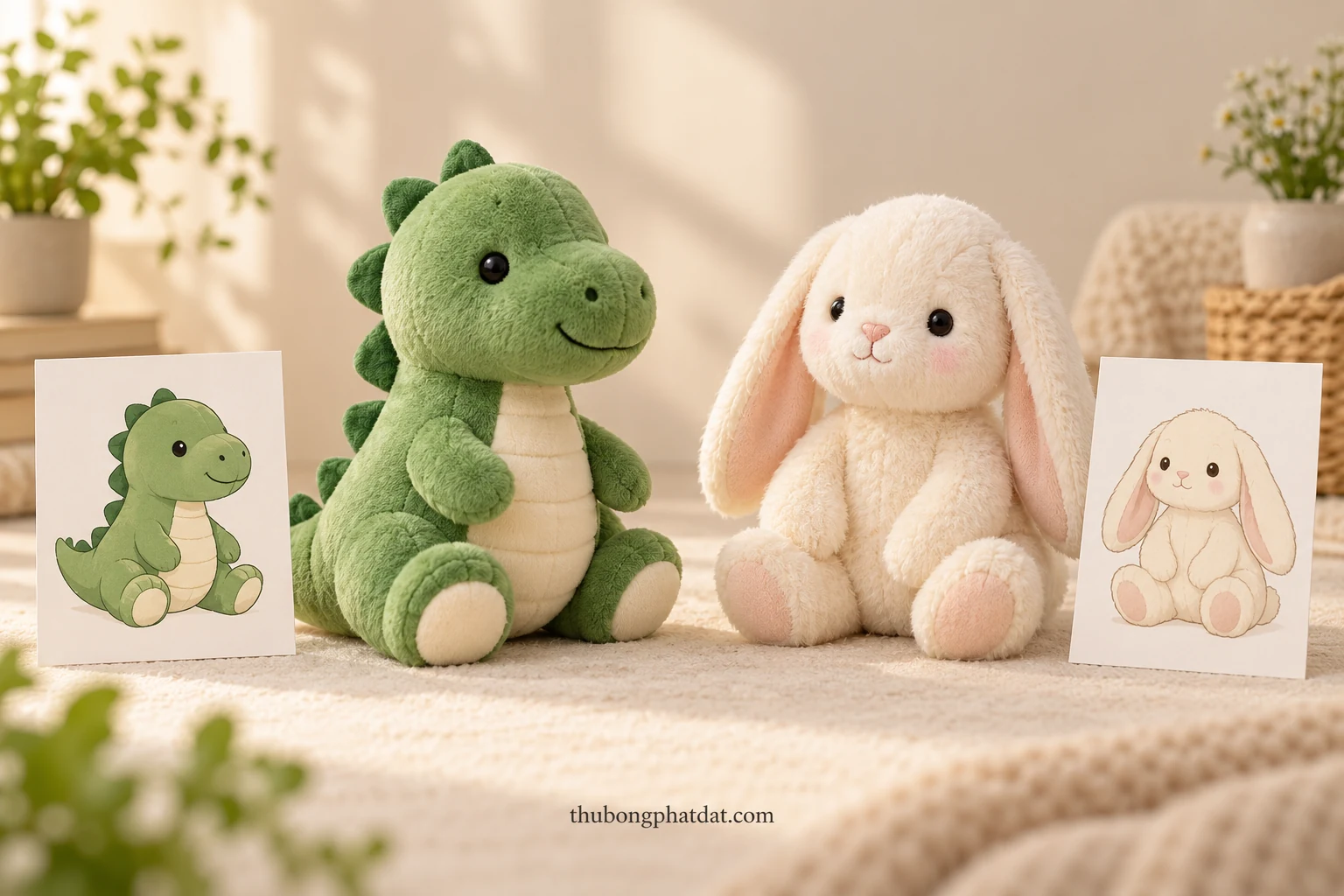
Each character needs its own approved reference and matching product brief.
Example: rabbit ears and a dinosaur label are different changes
In this hypothetical example, R20 is a rabbit with a blue scarf and D15 is a green dinosaur. Revision two changes the rabbit’s ear shape. The dinosaur only needs updated label wording. This does not describe an actual Phat Dat order.
For R20, review the revised ears together with the overall head and accessories. For D15, compare the correct product’s label with the approved wording. A photograph of the revised rabbit does not show that the dinosaur was checked; a correct D15 label does not approve R20’s ears.
When one change applies to several codes, list them and ask what needs reviewing for each. A photograph of one product does not establish that a shared colour change has been checked across the set.
Read findings by product code and inspection scope
- Which code, size, colour and approved revision were reviewed?
- Which features were checked, how, and on what agreed portion of the order?
- What matched, what differed, and what remains unchecked?
- Who will review the correction and confirm the next step?
If sampling was agreed, the report should describe that scope. Findings from selected samples do not mean every unit was checked. Testing, documents and buyer-specific acceptance requirements need their own agreement; visual similarity is not evidence that all export requirements are met.
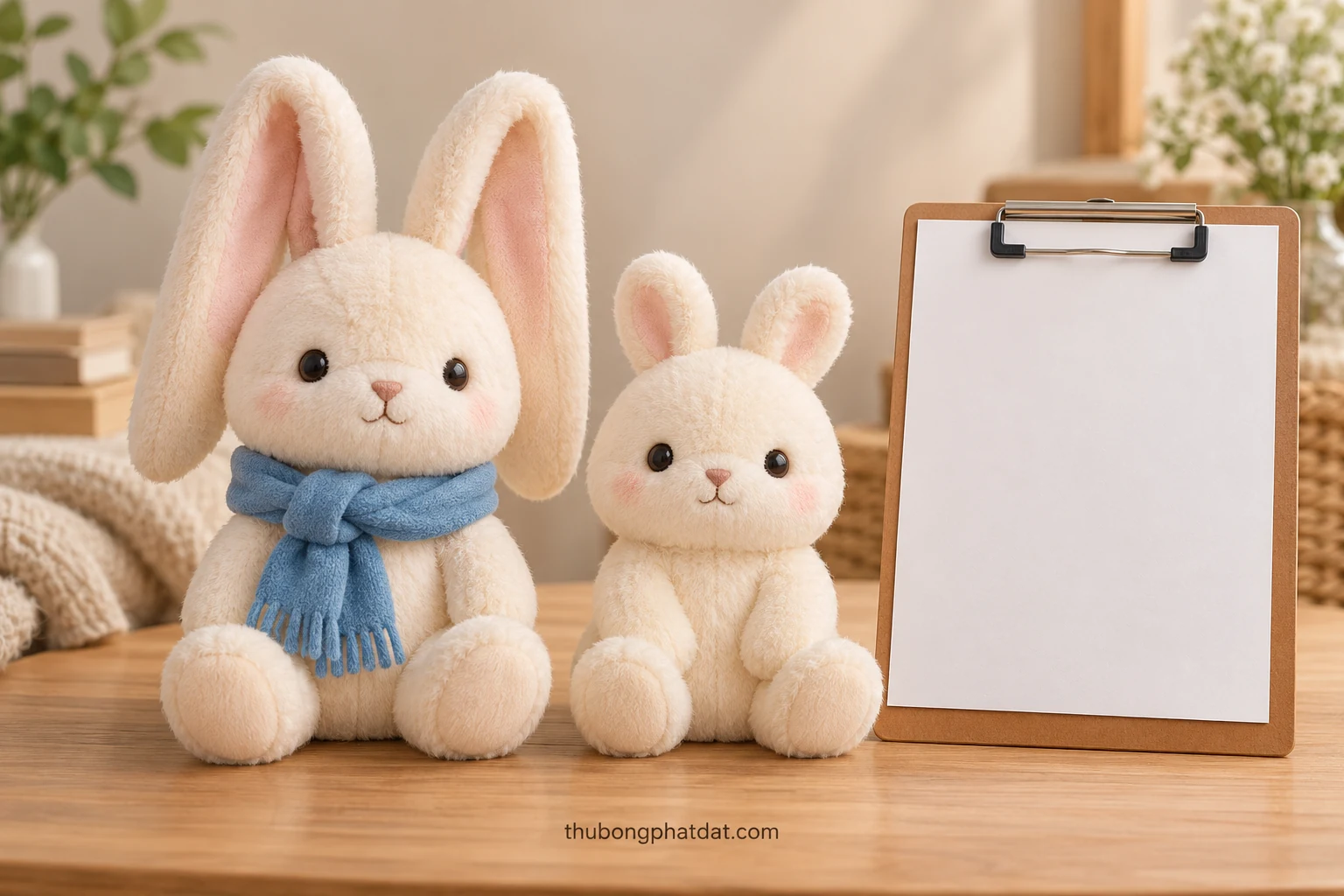
Different ear shapes and accessories need checking against the rabbit’s approved revision.
A clear follow-up request
You could write: “Please separate the findings for R20 revision two and D15 with the new label. For each code, show the changed feature, identify what was checked and list open points. Where there is a difference, confirm the affected goods and how the corrected sample will be submitted for approval.”
When discussing sample approval and pre-export plush inspection with Phat Dat, provide the product list and buyer requirements at the start. Inspection scope, documents and schedule must be confirmed for the order. The illustrations explain the comparison method; they are not photographs of a company export order or certification evidence.